


Merchandise Financial Planning
Merchandise financial plans that stay live all season.
Most retailers set the season’s budget in spreadsheets, then watch it drift. Sales, margin and inventory plans sit apart from the buy, the allocation and the markdowns. Variance gets explained after the fact instead of corrected in time.
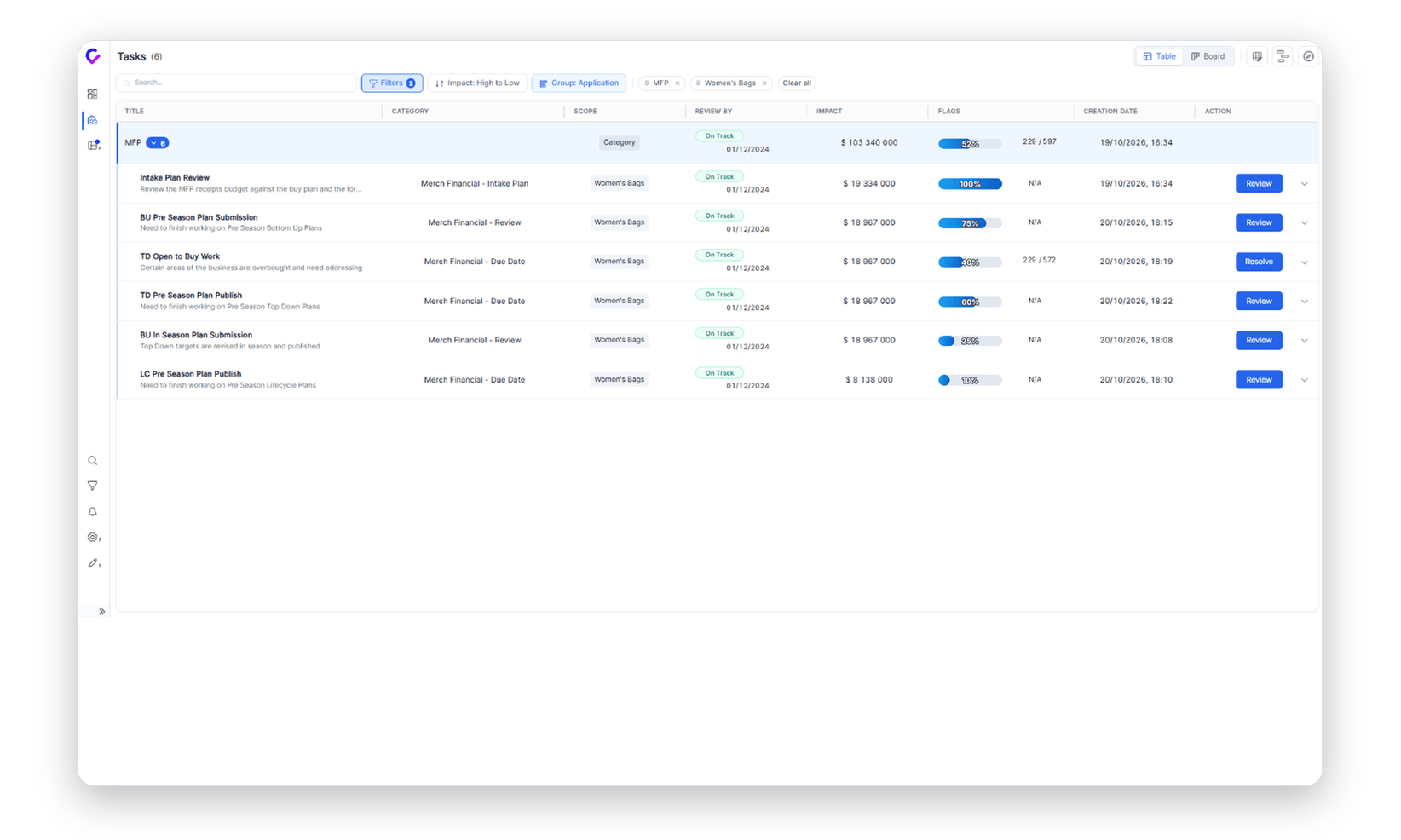
Dataviva Merchandise Financial Planning sets sales, margin and inventory targets by category, channel and period. It keeps them current as actuals and the demand forecast change. Targets and open-to-buy flow straight into assortment, buying and allocation and replenishment on the same platform, so nobody reconciles plan and execution by hand.
50%
Reduce Decision Time
25%
Lower End-of-Season Inventory
5%
Increase Sales
5%
Increase Margin
Applications

Top-Down and Bottom-Up Plans
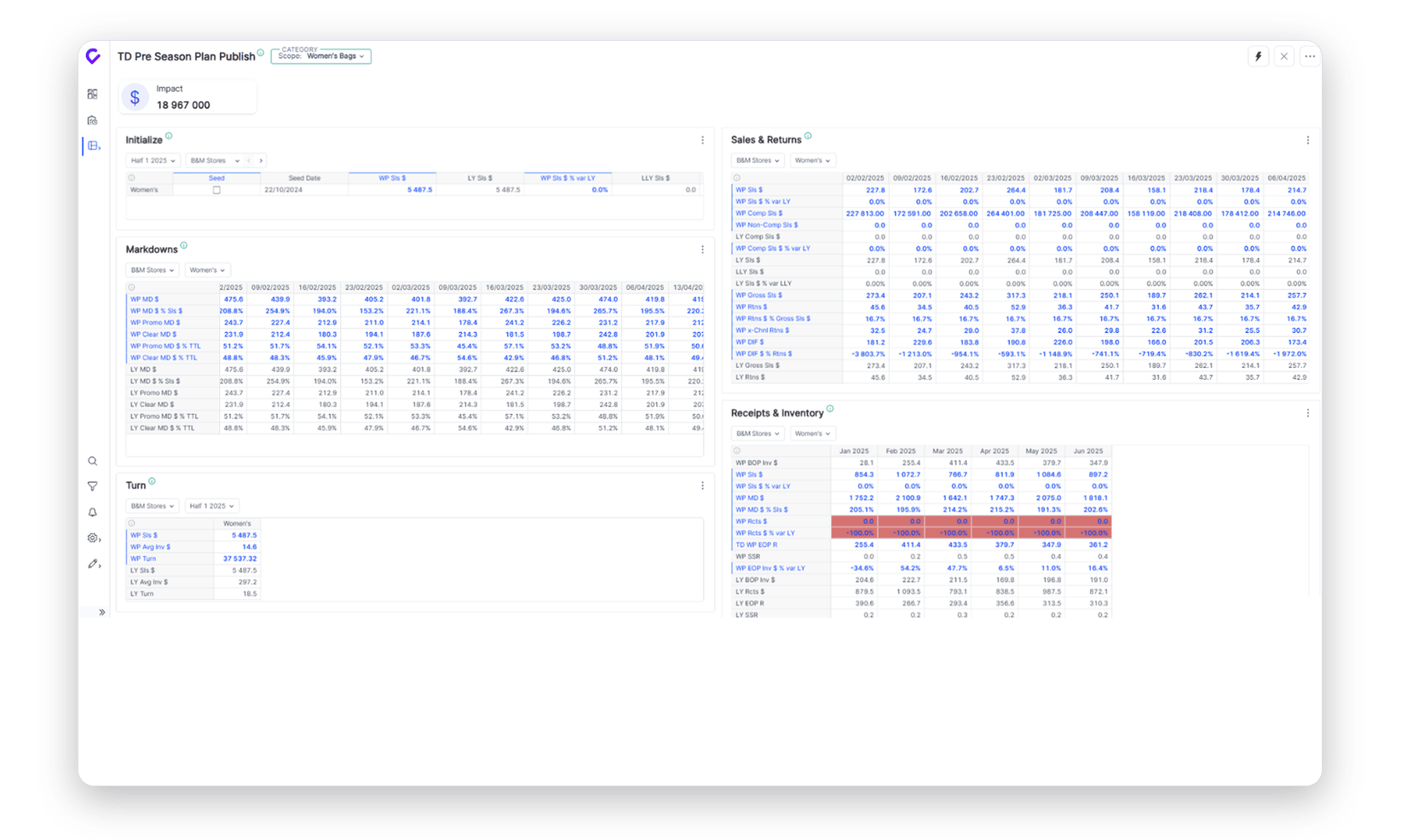
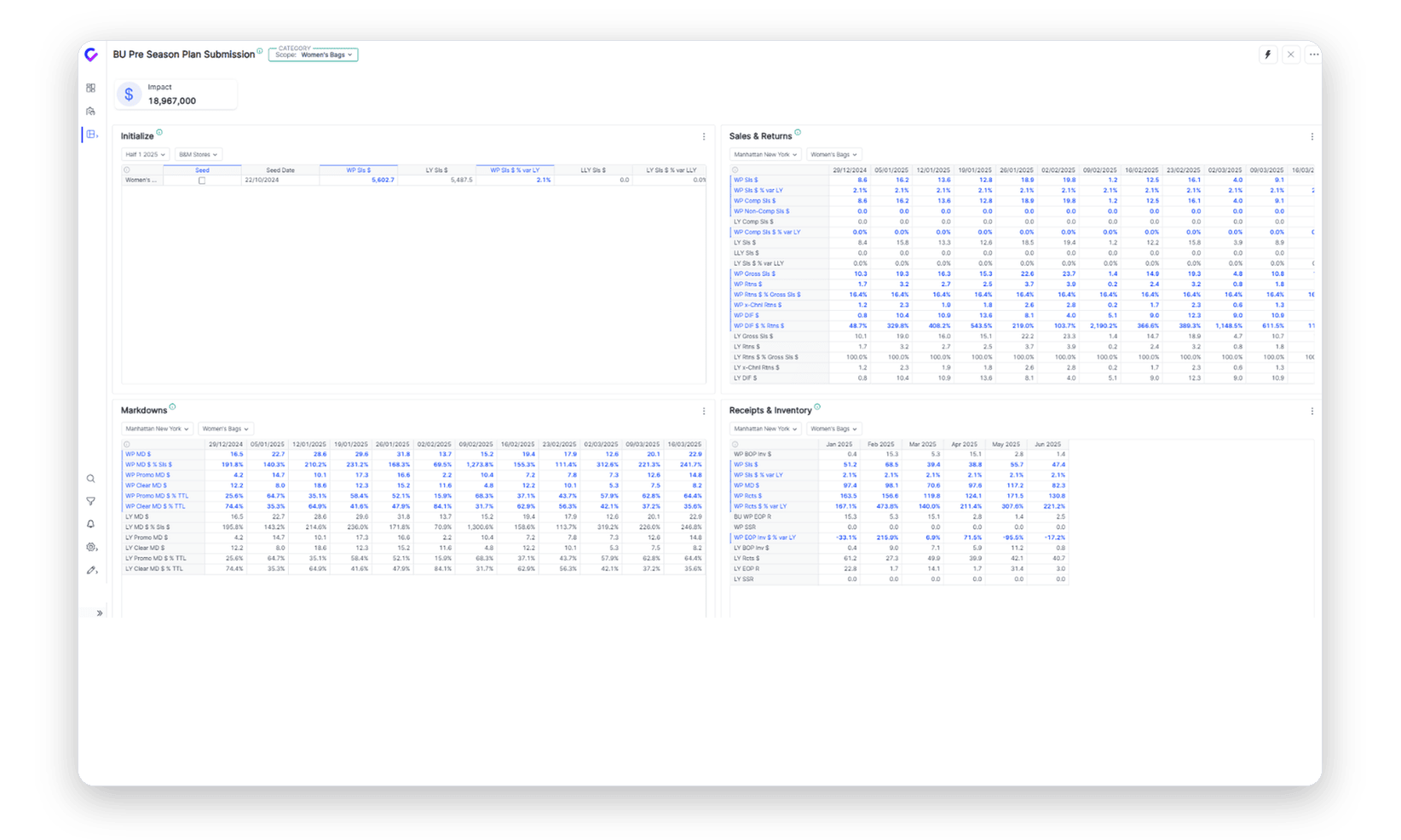
Set sales, margin and inventory targets for the business, then break them down by category, channel, location and period. Bottom-up plans from category teams roll back up, and gaps against the target show at every level. Plans run across every store and channel you sell through, not one spreadsheet per team.

Open-to-Buy
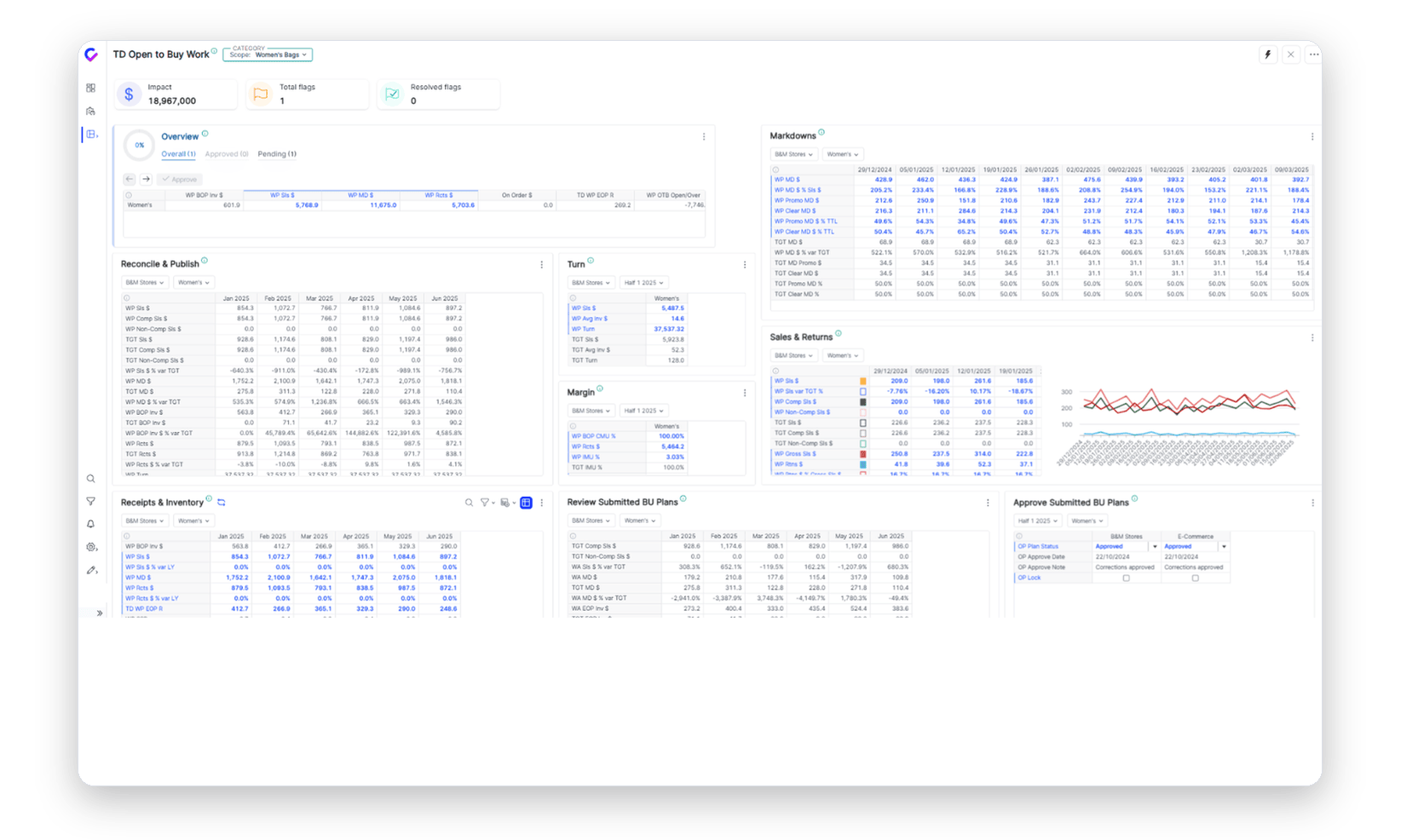
Open-to-buy is calculated from the plan, stock on hand and stock on order, and updates as sales come in. Buyers see what budget is left for each category and period before they commit. Approved buys flow into Purchasing & Supplier Collaboration as orders.

Receipt and Inventory Planning
Plan receipts by period to hit your stock and cover targets, and track weekly sales, stock and intake (WSSI) against them. Receipt plans set the frame for the buy, the allocation and the markdown.

In-Season Reforecast
Plans are rolling, not set once a season. Dataviva reforecasts the rest of the season from actuals and the demand forecast, so you see where sales, margin and stock will land while there is still time to act.

Scenarios and Versions
Compare what-if scenarios side by side: a deeper buy, an earlier markdown, a new store. Keep the original budget, the current plan and the latest forecast as separate versions, and see the difference in units and money.

Plan vs Actual, by Exception
Dataviva tracks plan against actual for sales, margin, stock, sell-through and GMROI, and flags the lines that are drifting. Teams spend their time on the categories that need a decision, not on reconciling reports.

Targets That Drive Execution
Targets and guardrails flow into downstream decisions on the same platform: range breadth and depth in Assortment & Category Planning, stock in Supply Chain Planning, and markdowns and promotions in Pricing & Promotions. The plan and the execution never drift apart.

Built for Fashion and Grocery Alike
Plan short-lifecycle fashion by season and drop, and long-lifecycle grocery and specialty ranges by week and period, in the same tool.
Gartner does not endorse any company, vendor, product or service depicted in its publications, and does not advise technology users to select only those vendors with the highest ratings or other designation. Gartner publications consist of the opinions of Gartner’s business and technology insights organization and should not be construed as statements of fact. Gartner disclaims all warranties, expressed or implied, with respect to this publication, including any warranties of merchantability or fitness for a particular purpose.
GARTNER is a registered trademark and service mark of Gartner, Inc. and/or its affiliates in the U.S. and internationally and is used herein with permission. All rights reserved.