


Supply Chain Planning
Supply Chain Planning that keeps up when the plan meets reality.
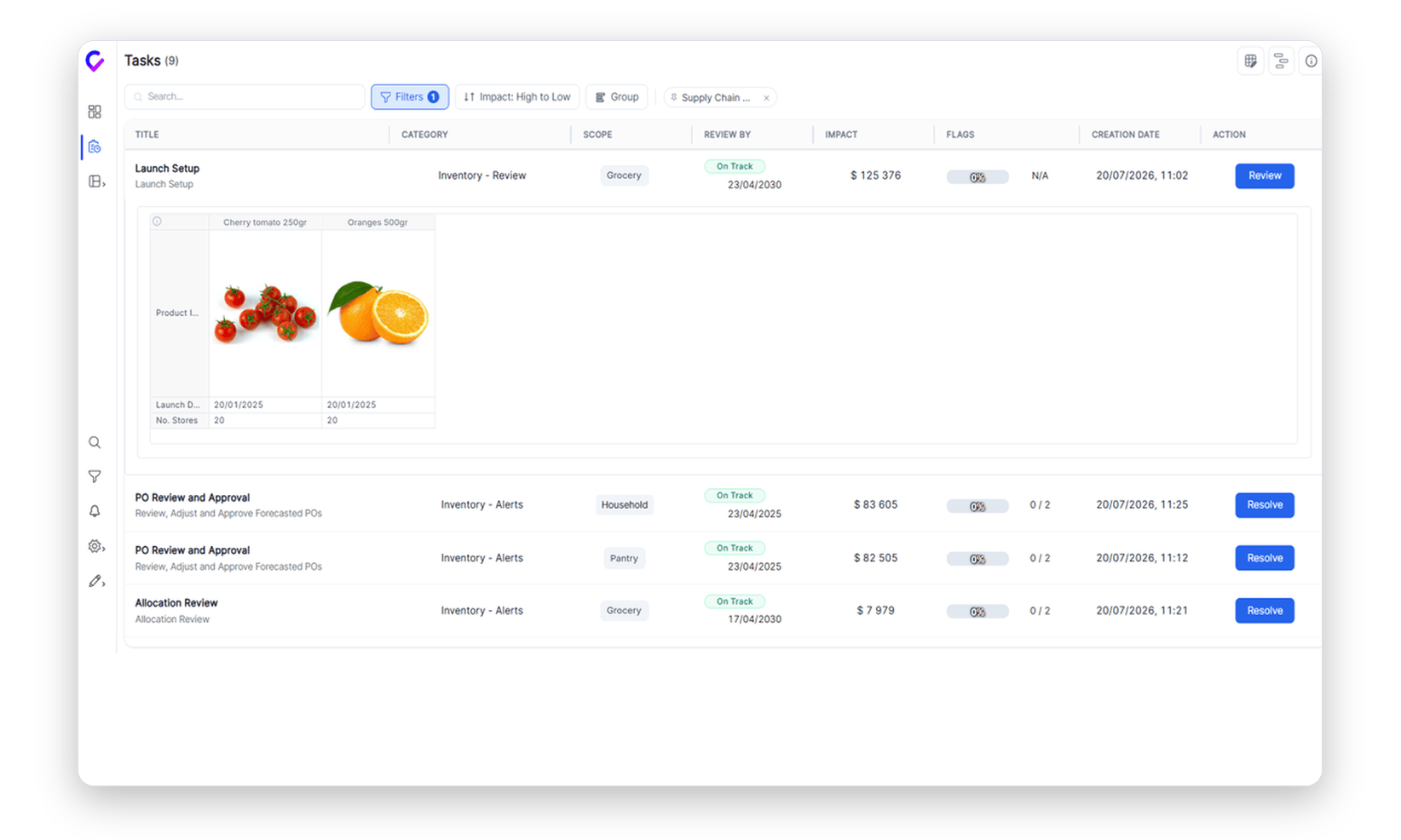
Most retailers plan in one system and execute in another. When a delivery lands short, a promotion runs hot or a store runs out of space, people fix it by hand in spreadsheets.
Dataviva Supply Chain Planning turns the demand forecast into store and DC replenishment, allocation and orders, and re-plans automatically when something changes. Pair it with our Inbound Planning solution to automate raising and approving purchase orders as well.
Use one module or the full flow, on top of your existing ERP and WMS. See how it works in Fashion, Grocery and Specialty retail.
60%
Fewer Out-of-Stocks
50%
Reduce Decision Time
25%
Reduce Overstocks
5%
Increase Sales
Applications

Automated Multi-tier Replenishment
Time-phased orders for every store and DC, calculated from the forecast, current stock and lead times. Policies balance service level against inventory cost item by item. Planners work by exception, with approvals and ring-fenced stock where availability matters most. Orders respect prepacks and case packs, so stores are replenished in the units your DCs actually pick, without breaking packs or over-sending sizes.

Multi-Echelon Inventory Optimization
Most tools set stock one location at a time, so every store and DC protects itself and total stock ends up too high, in the wrong places. Dataviva plans every tier together, from suppliers and DCs to stores. Planners set the service targets; Dataviva decides how much stock to hold at each tier and where to keep the buffer, at the lowest total inventory. Fresh and short-life goods are planned by shelf life at every tier, and targets move as demand, lead times and supply change. Harding+ plans stock from its warehouses to 300+ shops on 75 cruise ships this way, and cut out-of-stocks by 60%.

Allocation
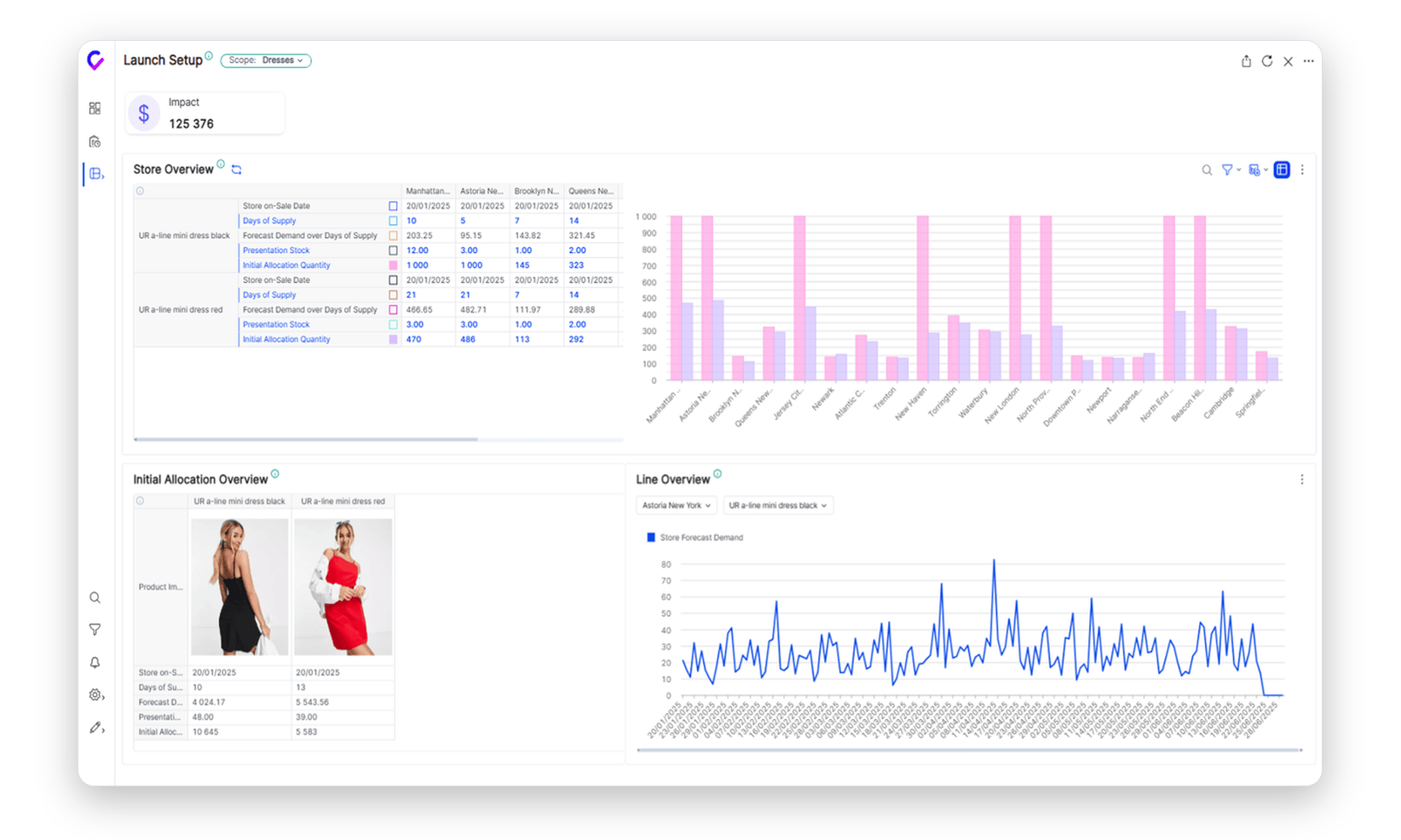
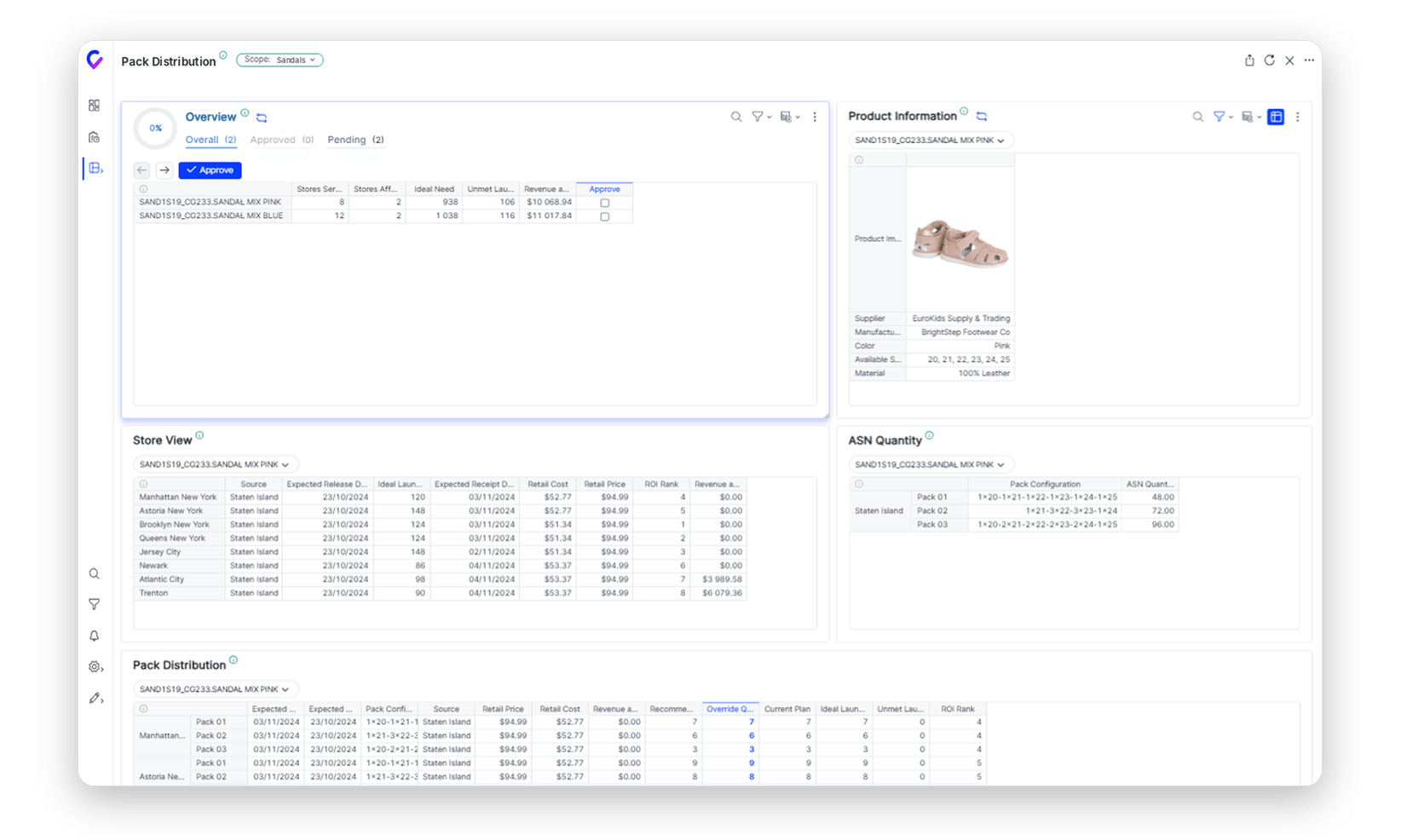
First push and in-season allocation at SKU, store and channel level, driven by demand, assortment intent and store rules. Prepacks are optimized too: Dataviva chooses the pack configurations that best match each store's size curve and the warehouse's limits, and decides when to send packs and when to send loose units. Allocation and replenishment run as one flow, so no stock is planned twice.

Inbound Order Planning
Replenishment plans become purchase order recommendations that respect supplier terms, order multiples and truck fill, and flow straight into Purchasing & Supplier Collaboration for approval and issue.

Short-Shipment Re-allocation
When a delivery arrives late or short, Dataviva re-plans allocation and replenishment against what actually arrived. Stores that need the stock most get it first, and nobody rebuilds the plan in a spreadsheet.

Replenishment Strategy Optimization
Most tools tune the numbers inside the replenishment method you already picked. Dataviva picks the method too. For every item at every location, it picks the policy that best fits the inventory-versus-service trade-off you set. Policies are re-tuned as demand changes, and items with thin history inherit the choice from similar items.

Disruption Management
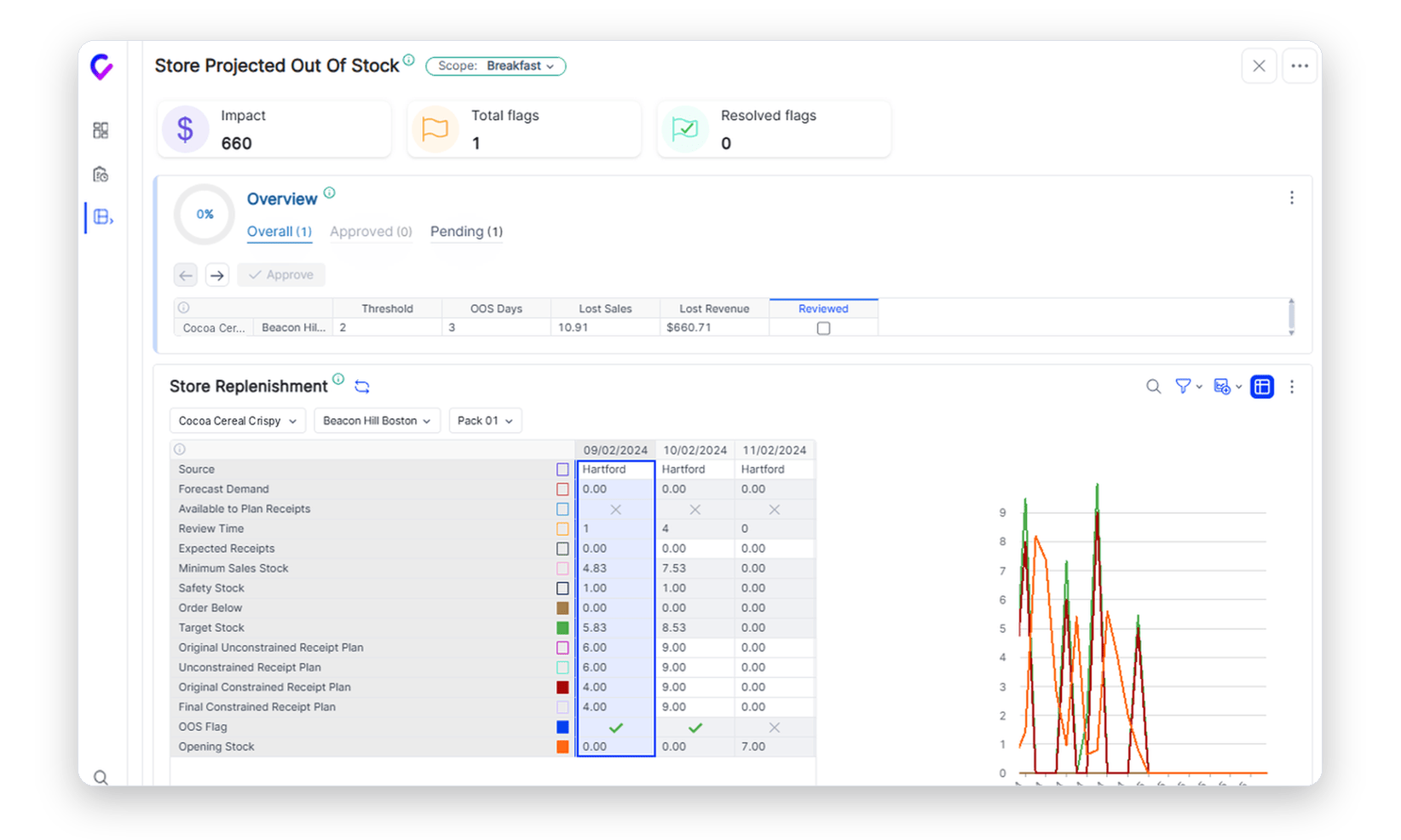
A near real-time view of stock and sales across the network. Disruptions are caught early, their impact is sized, and corrections are recommended — or applied automatically within the guardrails you set. Planners see the few issues that matter, not every exception.

Capacity Optimization
Orders and deliveries respect warehouse, store and transport capacity. Flows are smoothed ahead of peaks, trucks go out fuller, and teams avoid last-minute rework when a bottleneck appears.

Runs Alongside Your ERP
Dataviva sits on top of your ERP and WMS and re-plans when data changes, not on a nightly batch. Start with one module and add the rest without a rip-and-replace project. See the Dataviva platform.
Case Studies

Hypermarket Supply Chain
Grocery, Supply Chain
This hypermarket’s supply chain was partly managed manually and partly automated, leading to a lack of synchronization across systems and departments as well as issues in Store replenishment and Distribution Center fulfillments. With Dataviva Supply Chain solution, the company was able to boost operational efficiency, centralize and synchronize their supply chain…

Cruise Retail Supply Chain
Specialty, Travel Retail, Demand Forecasting, Supply Chain
Harding+ runs 300+ shops on 75 cruise ships. With Dataviva’s AI-Led Planning, out-of-stocks fell 60% and like-for-like stock fell 10%, and planners follow over 90% of its recommendations.

Personal Care Demand Planning
Specialty, Health & Beauty, Demand Forecasting, Promotions
An Eastern European health, beauty and household retailer with 350,000+ SKUs automated forecasting and replenishment with Dataviva. Overstocks fell 13–15% in stores and 75% in warehouses, and planners became 50% more efficient.
Related News


Dataviva in the 2026 Gartner® Market Guide for Retail Forecasting, Allocation and Replenishment, Short Life Cycle
Gartner, Supply Chain, Retail, Inventory Planning, Forecasting
Dataviva named in the 2026 Gartner® Market Guide for Retail Forecasting, Allocation and Replenishment Solutions: Short Life Cycle Products
new
Dataviva in the 2026 Gartner® Market Guide for Retail Forecasting, Allocation and Replenishment, Long Life Cycle
Supply Chain, Retail, Inventory Planning, Forecasting, Gartner
Dataviva named in the 2026 Gartner® Market Guide for Retail Forecasting, Allocation and Replenishment Solutions: Long-Life-Cycle Products
new
AI Revolutionizes Cruise Retail: Harding+ and Dataviva Set Sail for Success
Inventory Planning, Forecasting, Cruise Retail, Retail Solutions
07 January 2025 Leading cruise retailer Harding+ and next-generation planning platform Dataviva celebrate the successful implementation of AI-driven demand forecasting and inventory management. In mid-2023, Harding+, a global leader in cruise retail, embarked on a transformative partnership with Dataviva to enhance forecasting and replenishment capabilities through advanced AI-driven solutions. This collaboration aimed to significantly improve…
newGartner does not endorse any company, vendor, product or service depicted in its publications, and does not advise technology users to select only those vendors with the highest ratings or other designation. Gartner publications consist of the opinions of Gartner’s business and technology insights organization and should not be construed as statements of fact. Gartner disclaims all warranties, expressed or implied, with respect to this publication, including any warranties of merchantability or fitness for a particular purpose.
GARTNER is a trademark of Gartner, Inc. and/or its affiliates.